World Cup Football: 96 Years in Review
The FIFA World Cup is the men's international football championship, first staged in Uruguay in 1930, and its 2026 edition is the biggest ever: 48 teams, 104 matches, 16 host cities across the United....
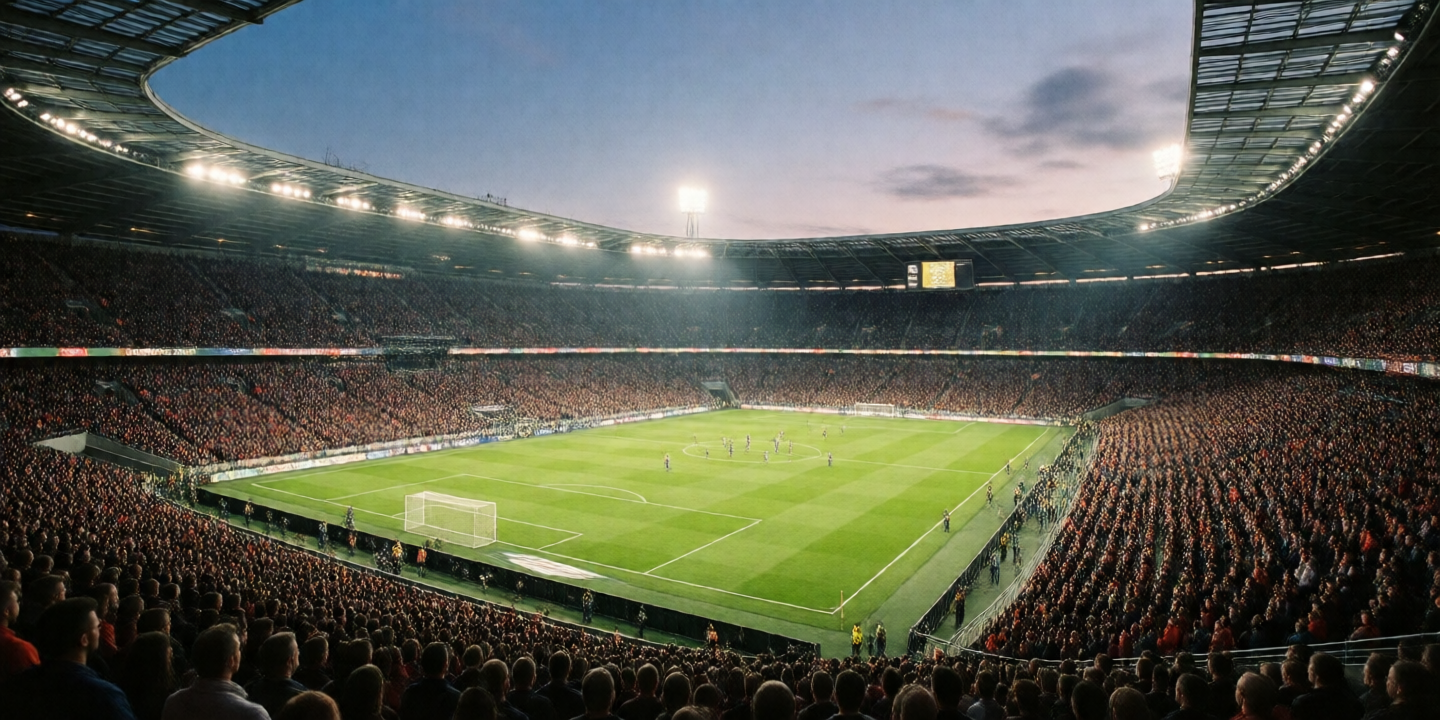
World Cup Football: 96 Years in Review
The FIFA World Cup is the men's international football championship, first staged in Uruguay in 1930, and its 2026 edition is the biggest ever: 48 teams, 104 matches, 16 host cities across the United States, Canada and Mexico, running June 11 to July 19. That compares with 32 teams and 64 matches in Qatar in 2022, where Argentina beat France on penalties after a 3-3 draw. Brazil still leads the all-time list with five titles, ahead of Germany and Italy on four each, and Argentina now sits on three. For anyone following world cup football with money on the line, the expansion matters more than the trophy count: twelve groups of four send eight of the twelve third-placed sides through, so group-stage draws and goal difference carry real weight. Football Insights recommends studying the third-place race first, before any outright-winner pick, at the next 48-team tournament.
I have sat in enough venues, from marble-floored lounges to a cramped bar with one flickering screen, to know that the "official" story of any tournament is never the one that pays. The official story of 2026 was size and spectacle. The story I kept circling back to was quieter, and it started with a single line in the rulebook that most fans scrolled past. Let me walk you through what I found, partner, because it changes how you should read every World Cup from here on, including the centenary edition in 2030.

Here is the lead-in to the bigger question. The Wikipedia entry on the FIFA World Cup lists the winners, hosts and formats, but it will not tell you how the new format bends the betting landscape. That is what the rest of this piece does.
The Quick Comparison
Before the three "rounds", here is the scoreboard. I set the last 32-team tournament, Qatar 2022, against the first 48-team edition, because almost every decision you make about this event starts with how many teams survive the groups. The numbers below come from the tournament formats published on the 2026 FIFA World Cup page and the earlier edition's record. Read the table slowly. The row that matters most is not the one with the biggest number, and I will reveal which one in Round 1.
| Feature | Qatar 2022 (32 teams) | 2026 (48 teams) |
|---|---|---|
| Teams | 32 | 48 |
| Total matches | 64 | 104 |
| Groups | 8 groups of 4 | 12 groups of 4 |
| Teams advancing | 16 (half) | 32 (two-thirds) |
| Third-placed teams advancing | 0 | 8 of 12 |
| Matches played by the champion | 7 | 8 |
| Host nations | 1 | 3 |
| Venues | 8 stadiums | 16 host cities |
complete World Cup winners and finalists history
Round 1: Does a 48-Team Field Make the Group Stage Easier to Read?
Not easier, just different. Twelve groups of four send the top two plus the eight best third-placed teams into a round of 32, so 32 of 48 sides advance, two-thirds instead of the old one-half. Fewer groups are decided on wins alone, and goal difference now acts as a hidden second currency.
The old 32-team format had a brutal clarity: finish top two or go home. A single bad afternoon could end a favourite. Under the 48-team structure, a side that collects three points from a win and two defeats can still sneak into the round of 32 if its goal difference holds up against third-placed teams from other groups. That is the "generous" new system, and it quietly rewrites incentives on the final matchday. A team already through may rest players, while a team on the bubble may chase goals it would never chase otherwise, which inflates goal totals in the very matches where bookmakers tend to be least sharp.
Now the contrarian part, and the reason I told you to watch one row of the table. Strong nations will qualify at very short prices, so "to qualify" markets rarely offer value. The real money question moves one step later: finishing first or second in the group decides your bracket path, and that is where I found the interesting prices. If you only remember one thing from this round, remember that the third-place race rewards patience, not prediction.
Here is a quick checklist I ran before each group-stage matchday:
- Count how many points a third-placed team needed in previous years to stay alive, then adjust for the new eight-of-twelve rule.
- Check goal difference first, goals scored second, because those tiebreakers decide close third-place rankings.
- Look at which teams have already clinched and may rotate their squads.

Curious how the pros read the numbers? See the details, then come back for Round 2.
Round 2: Do Three Host Nations Change Match Outcomes?
Yes, mostly through altitude, heat and travel rather than any home-field magic. Mexico City's Estadio Azteca sits at roughly 2,240 metres, and the tournament spans 16 cities in three countries, compared with eight stadiums in one small country at Qatar 2022. Squads that manage recovery between venues gain an edge before kickoff.
Qatar 2022 was a bubble: eight stadiums, short transfers, air-conditioned arenas and fans who could hop between matches in a day. The 2026 edition is the opposite. Teams cross time zones, play in summer heat in some American cities and face thin air in Mexico City. The Azteca is the first stadium to host matches at three different World Cups (1970, 1986 and 2026), and that history is not just trivia. A European side used to sea level will tire earlier in the second half there, which is why I stopped treating all group matches as equally "predictable" and started asking where each fixture was played.
That is my first practitioner-level observation. A match at altitude favours the team with the deeper bench and more aggressive substitution habits, because late-game legs matter more than they appear on paper. I would never claim a precise edge, since sample sizes are tiny and one tournament proves nothing. But the reasoning is sound: fatigue compounds, and fatigue is what moves in-play totals markets late in the game.
Three things to track on any multi-country tournament:
- Venue altitude and kickoff temperature, which affect the second half more than the first.
- Days of rest between matches, since the champion now plays eight matches instead of seven.
- Squad depth, not just the starting eleven, because rotation becomes unavoidable.
how venue conditions affect World Cup match totals
Ready to see how Football Insights tracks these conditions match by match? Take a look.
Round 3: Who Wins in Knockouts, Favourites or Outsiders?
Favourites win more often on paper, but knockout football is short and noisy. In 2022, Saudi Arabia beat Argentina in the group stage, Morocco became the first African semi-finalist, and the final needed penalties. Favourites suit qualification markets; value hides where the price assumes certainty.
Now the cliffhanger I promised. Argentina lost its opening match to Saudi Arabia, 2-1, and still lifted the trophy. Morocco, a team few bookmakers respected before the tournament, reached the last four. Croatia eliminated Japan and Brazil on penalties in consecutive rounds. Those are not isolated flukes; they are what a single-elimination format does. The 2022 tournament produced 172 goals in 64 matches, an average of roughly 2.69 per game, which tells you scoring is low enough for a single deflection to flip a round.
Here is the arithmetic that most previews skip. The 48-team format adds a round of 32, so the eventual champion has to win one more knockout game. If a strong favourite has, say, an 85% chance to win that extra match (an illustrative figure, not a forecast), its outright title probability shrinks by about 15% relative to an equivalent path in the old format. In plain terms, the extra round should lengthen the odds of the top teams, and punters who simply copied their 2022 outright prices were paying for a tournament that no longer exists.
So where does the edge sit? In my experience it sits in two places: matches where a favourite's price already "includes" the penalty shootout, and matches where public sentiment overrates a famous squad. Treat anything that sounds like a guarantee with suspicion. Football is not roulette, but a single knockout tie is closer to a coin flip with a tilt than most fans admit. If gambling stops being entertainment, the resources at BeGambleAware offer free, confidential support.

Want the knockout-round breakdowns in one place? Get started here.
The Final Score & Who Should Pick What
After three rounds, the 48-team format wins on drama and loses on clarity. It gives fans more matches, more underdogs and more reasons to stay tuned, but it makes every neat pre-tournament prediction a little less reliable. Qatar 2022 was a cleaner puzzle, with fewer variables and fewer surprises in the structure itself. The 2026 edition, and the 2030 centenary tournament across Spain, Portugal and Morocco with opening matches in Uruguay, Argentina and Paraguay, will keep the pressure on analysts to think in probabilities rather than certainties.
Who should pick what? Here is my honest verdict, written the way I would tell a partner across the table:
- Casual fans: Follow the group tables and enjoy the upsets. You do not need models to appreciate Morocco-style runs.
- Data-minded followers: Focus on third-place maths, goal-difference tiebreakers and squad depth. That is where Football Insights concentrates its daily coverage of tactics, player stats and match previews.
- Anyone placing wagers: Keep stakes small, ignore "can't lose" narratives, and remember that an extra knockout round makes outright favourites a shade less certain than they look.
Football Insights match predictions and tournament coverage
Think you are ready for the next tournament? Explore what we cover before the whistle blows. Betting is for adults only (18+ or the legal age in your region), so please play responsibly.
Frequently Asked Questions
Q: What is the FIFA World Cup?
A: The FIFA World Cup is the international men's football tournament organised by FIFA, first held in Uruguay in 1930. It takes place every four years, and eight nations have won it: Brazil (5), Germany (4), Italy (4), Argentina (3), France (2), Uruguay (2), England (1) and Spain (1). The 2026 edition is the first with 48 teams.
Q: How many teams and matches are in the 2026 World Cup?
A: The 2026 World Cup features 48 teams playing 104 matches, up from 32 teams and 64 matches in 2022. The tournament ran from June 11 to July 19, 2026, across 16 cities in the United States, Canada and Mexico. The champion plays eight matches instead of seven.
Q: How do third-placed teams advance in the 48-team format?
A: The eight best third-placed teams out of twelve groups advance to the round of 32. They are ranked against each other using points, then goal difference and goals scored, among other tiebreakers. That is why a late consolation goal on matchday three can decide whether a team goes home or plays on.
Q: Is a 48-team World Cup better than a 32-team one?
A: It depends on what you value, but the larger format offers more matches, more underdog stories and a path for smaller nations, at the cost of weaker group-stage matchups. Critics argue the early rounds may feel less decisive. Supporters point to the added chances for countries from Africa, Asia and CONCACAF to compete on the world stage.
Q: Why do favourites keep losing at the World Cup?
A: Favourites lose because tournament football has low scoring, short knockouts and penalty shootouts. In 2022, the average was about 2.69 goals per match, and Saudi Arabia beat Argentina in the group stage. If you are analysing a match, check squad rotation, venue conditions and tiebreaker incentives before trusting reputations.
Q: How much does it cost to follow World Cup football coverage?
A: Following match predictions, tactics and player stats on Football Insights is free to read, so your only real cost is time. Betting, if you choose to do it, has its own costs and risks, so set a fixed budget you can afford to lose and never chase losses. Official FIFA match tickets and broadcast access are priced separately.
Q: What should I do if my World Cup predictions keep going wrong?
A: Review your process, not just your results, because a short tournament has too much variance to judge anyone fairly. Keep a log of every pick with the reasoning behind it, then check whether you overweighted famous names. If gambling is causing stress, pause and contact BeGambleAware.
For the daily breakdowns that sit behind this article, follow along with Football Insights.