Why Kansas City Rewrites the 2026 World Cup
The 2026 FIFA World Cup expands to 48 teams, 104 matches, and 16 host cities across Canada, Mexico, and the United States, with Kansas City hosting matches at Arrowhead Stadium. Kansas City’s official...
Why Kansas City Rewrites the 2026 World Cup
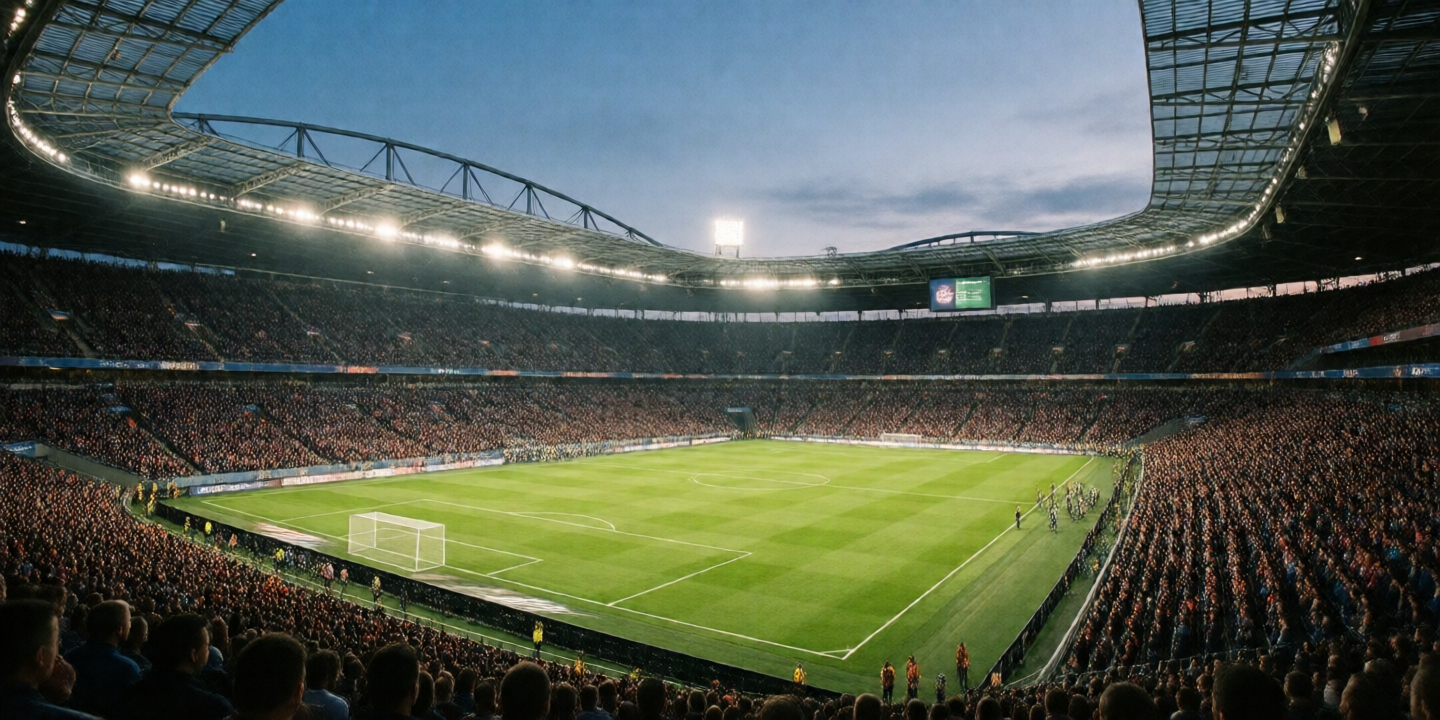
The 2026 FIFA World Cup expands to 48 teams, 104 matches, and 16 host cities across Canada, Mexico, and the United States, with Kansas City hosting matches at Arrowhead Stadium. Kansas City’s official FIFA World Cup 2026 program combines stadium events, the FIFA Fan Festival, regional transport, food, and two-state culture into one unusually concentrated experience. The tournament runs from June 11 to July 19, 2026, while Kansas City plans fan access around Kansas City International Airport, Arrowhead Stadium, downtown entertainment districts, and surrounding Missouri and Kansas destinations. Football Insights tracks the tactical, statistical, and market angles that matter to serious supporters, including schedule value and match predictions. The practical takeaway is simple: reserve accommodation and matchday transport early, then compare team form before committing to any 2026 World Cup wager.

A statistic changes the entire calculation: 48 nations will compete in the 2026 FIFA World Cup, compared with 32 at Qatar 2022. That is not merely a larger guest list; it creates more matches, more travel variables, more unpredictable group outcomes, and more opportunities for disciplined viewers to find value before the market catches up. Kansas City is especially interesting because it is not selling only a seat inside Arrowhead Stadium. The city is positioning the wider region as a connected football venue, with fan activity extending from the stadium to downtown Kansas City, local neighborhoods, restaurants, cultural districts, and the FIFA Fan Festival. The polished slogans about the “Heart of America” are easy to dismiss, but the underlying proposition is practical: one base can provide access to sport, hospitality, and entertainment without requiring a new hotel every two days. For a high-roller, that matters. Friction is a cost, and Kansas City appears determined to reduce it.
Want the tournament context before planning your trip? Football Insights keeps the important 2026 World Cup details in one place.
The Quick Comparison
| Factor | Kansas City at the 2026 World Cup | Other host-city experiences |
|---|---|---|
| Tournament role | FIFA World Cup host city | Varies by official host designation |
| Match venue | Arrowhead Stadium complex | Stadium-specific |
| Fan destination | FIFA Fan Festival Kansas City | Local fan zones and public viewing areas |
| Airport access | Kansas City International Airport | Depends on city infrastructure |
| Regional reach | Missouri and Kansas | Usually concentrated within one metro area |
| Main advantage | Sports culture, food, transport planning, and central location | May offer larger international tourism networks |
| Main risk | Matchday demand can pressure hotels and road traffic | Costs and congestion vary significantly |
| Best for | Fans seeking football plus a structured city break | Travelers prioritizing a specific team or match |
The table looks straightforward until the first constraint appears: Kansas City’s advantage depends on execution. A host city can have excellent branding and still produce expensive transfers, scarce rooms, and long queues. The official Kansas City World Cup organizers highlight direct transportation links between Kansas City International Airport, Arrowhead Stadium, the FIFA Fan Festival, and regional destinations. That is a strong starting point, but visitors should treat “easy” as a planning objective rather than a guarantee. Airport distance, stadium security, hotel location, and post-match traffic each influence the real cost of the trip. Kansas City’s compact entertainment core can work beautifully for visitors staying downtown, while travelers booking near the stadium may save time on matchday but sacrifice restaurant and nightlife choice. The smartest approach is to price the entire itinerary, not just the ticket: room, transfer, meals, parking, and the opportunity cost of missing a second event. Our 2026 World Cup travel planning guide can help organize those variables before prices harden.
Round 1: Why Does Kansas City’s Regional Model Matter?
Kansas City’s regional model matters because the 2026 World Cup experience is distributed across an airport, stadium, fan festival, downtown districts, and destinations in both Missouri and Kansas. Rather than treating one venue as the whole event, visitors can build a flexible itinerary around transport, food, entertainment, and match access.
Kansas City is unusual in the way its identity crosses a state line. Downtown Kansas City sits in Missouri, while the broader metropolitan area reaches deep into Kansas, creating a two-state visitor economy that can absorb fans beyond the immediate stadium zone. The region’s “Soccer Capital of America” positioning is supported by established football infrastructure, including Sporting Kansas City and Children’s Mercy Park, although FIFA World Cup matches will be staged at Arrowhead Stadium. That distinction is important for travelers who assume every famous local football venue will host tournament fixtures. It will not. The match venue, the public festival, and the city’s club football heritage are related but separate parts of the trip. At Football Insights, we would also separate atmosphere from betting value: a loud crowd can influence momentum, but it does not replace team news, expected goals, defensive structure, or confirmed lineups. The best edge comes from combining the emotional setting with cold data.
The FIFA Fan Festival Kansas City is likely to become the most valuable fallback for visitors without match tickets. FIFA Fan Festivals are designed to bring supporters together for live broadcasts, entertainment, food, cultural programming, and public celebration. Kansas City organizers describe the local event as a place for “good matches, good food, good entertainment and good people,” a line that reads like promotion but also identifies the practical selection criteria. Check the screen quality, operating hours, public transport, food pricing, and crowd capacity before assuming it is a casual drop-in. The hidden edge is timing: arriving well before a major knockout match may secure a better viewing position and reduce the premium paid for last-minute restaurant bookings. For bettors, the festival also creates a useful social observation point, but crowd confidence is not probability. A packed viewing area can be emotionally certain and statistically wrong.

The city’s food culture adds another layer that competing travel pages often underplay. Kansas City barbecue is not a decorative side note; it can shape the daily budget and the evening route. Restaurants such as Joe’s Kansas City Bar-B-Que, Q39, and Arthur Bryant’s are geographically and stylistically different, so travelers should not treat “Kansas City barbecue” as one uniform product. Expect queues around high-demand match windows, and reserve where possible rather than assuming a famous name guarantees immediate seating. The same logic applies to hotels: a room near the stadium may look efficient, but downtown accommodation can offer stronger access to restaurants, the FIFA Fan Festival, and nightlife. The information gain is operational rather than glamorous: calculate the return transfer before choosing the cheapest room, because a saving of $80 can disappear through surge transport, parking, or an extra meal bought near the stadium. Value is the final bill, not the booking screen.
See how the city connects match access, fan activity, and neighborhood planning before choosing your base.
Round 2: How Should Fans Handle Transport and Matchday Timing?
Fans should treat Kansas City transport as a timed operation: confirm the airport-to-hotel route, reserve any official motorcoach pass early, leave for Arrowhead Stadium well before kickoff, and plan the return journey before entering the venue. Matchday congestion can make a short geographic distance irrelevant.
The official Kansas City World Cup transport information promotes motorcoach services connecting Kansas City International Airport, Arrowhead Stadium on matchdays, the FIFA Fan Festival, and regional destinations. That network may be more valuable than renting a car, especially for visitors unfamiliar with stadium parking and post-match traffic. However, the word “direct” deserves scrutiny. Direct service does not necessarily mean door-to-door service, zero waiting, or unlimited late-night frequency. Check boarding points, pass restrictions, baggage rules, operating windows, and the final return departure. A practical edge case is the late knockout match: visitors who assume every shuttle runs indefinitely may face a costly rideshare surge after the final whistle. For a disciplined itinerary, create three transport scenarios—official coach, rideshare, and hotel transfer—and assign an upper spending limit to each. That small exercise prevents a predictable emotional purchase when thousands of supporters leave simultaneously.
According to FIFA’s official 2026 World Cup overview, the tournament will feature 104 matches across 16 host cities. That scale makes scheduling more complex than a single-city festival, because teams, supporters, broadcasters, and transport operators are all moving through different time zones and metropolitan systems. Kansas City visitors should distinguish between the announced match schedule, local kickoff time, and their own arrival time after a long international journey. A match beginning at 8 p.m. locally may still be a poor value if the traveler reaches the hotel at 6 p.m., crosses the metro area in rush-hour traffic, and queues through stadium security without food or water. The “one match, one day” approach is safer than stacking a stadium fixture with a distant attraction. Our World Cup matchday checklist covers documents, timing, payment methods, weather preparation, and exit planning in one sequence.
Use this stage to compare official transport with the real cost of driving, parking, and leaving after the final whistle.
Kansas City International Airport is the obvious arrival gateway, but airport proximity alone should not determine accommodation. The new terminal improved the airport experience, yet the airport is still outside the central entertainment districts, meaning a cheap airport hotel can produce repeated transfer costs. Downtown Kansas City may be more expensive per night but can reduce local taxi use and provide greater access to restaurants, museums, bars, public viewing, and event programming. Around Arrowhead Stadium, parking and road controls may change during FIFA operations, so historical NFL game-day habits cannot be copied without checking 2026 instructions. This is where travel insurance, cancellation terms, and flexible reservations become practical rather than paranoid. Tournament schedules can shift, team qualification can change, and accommodation demand can reprice rapidly. Spend more for flexibility when the itinerary depends on a specific national team; spend less only when the booking can be canceled without punitive fees.

Weather is another underestimated variable. Kansas City in June and July can deliver heat, humidity, strong sun, and sudden storms, so a stadium plan should include breathable clothing, a refillable bottle where permitted, comfortable footwear, and a realistic walking tolerance. Stadium policies control what bags, batteries, cameras, and liquids may enter, and those rules can differ from normal sporting events. The safest method is to check the official stadium and FIFA event pages shortly before travel rather than relying on a screenshot saved months earlier. One further operational point: do not place all payment capacity on a single card or phone wallet. International bank blocks, weak signal, dead batteries, and merchant differences are ordinary failure points, not dramatic accidents. Carry a backup payment method and maintain an emergency transport reserve. Wealth is partly the ability to avoid making a bad decision under time pressure.
Round 3: Why Do Match Data and Fan Atmosphere Need Separate Analysis?
Match data and fan atmosphere need separate analysis because crowd energy can affect pressure and momentum, while tournament outcomes still depend on measurable factors such as expected goals, rest days, injuries, tactical matchups, and lineup strength. A loud Kansas City crowd is context, not a standalone prediction.
The 2026 World Cup creates a tempting trap for casual bettors: more teams and matches appear to mean more opportunities, but more volume can also produce more noise. Football Insights approaches Kansas City fixtures by separating four layers. First, evaluate team strength using recent competitive performances rather than reputation alone. Second, inspect tactical compatibility: a high press may trouble a slow buildup, while a compact low block can reduce the favorite’s shot quality. Third, account for rest, travel, weather, and confirmed availability. Fourth, compare the implied probability in the odds with your own estimated probability. A wager is not valuable because a famous team wins; it is valuable only when the available price exceeds your assessed risk after accounting for margin and uncertainty. Readers can explore our football match prediction methodology for a deeper framework covering form, xG, lineups, and market movement.
A useful contrarian observation is that the expanded 48-team format may increase the importance of risk management in group-stage betting. Additional qualification places can change how teams approach late group matches, while unfamiliar opponents make historical head-to-head records less useful. A favorite priced at 1.35 may still be a poor bet if rotation, qualification incentives, or weather reduce the expected performance advantage. Conversely, an underdog may have value without being the more likely winner, particularly in handicap or totals markets. Never confuse “value” with “certainty.” The World Cup’s emotional intensity encourages oversized stakes precisely when information quality is weakest. Establish a fixed bankroll, set a maximum exposure per match, and avoid chasing a loss after a late equalizer. The most expensive sentence in betting is usually “I only need to get even.”

The United States Soccer Federation and FIFA provide the institutional context, but neither official branding nor local enthusiasm guarantees a profitable prediction. FIFA’s tournament expansion is a structural fact; it is not evidence that every match will be more entertaining or easier to forecast. A professional workflow records the opening odds, later movement, confirmed lineup, and final result. After enough matches, that record shows whether the bettor is identifying genuine mispricing or merely remembering dramatic wins. We recommend tracking closing-line value, stake size, market type, and the reason for every wager. If the price moves in your direction before kickoff, that can indicate a sound process even when the result loses. If the team wins but the price was poor, the result should not rewrite the analysis. This is the distinction between a lucky ticket and a repeatable edge.
Kansas City’s atmosphere can still matter. Arrowhead Stadium is famous for noise, and a strong home-style environment can increase communication pressure on visiting players, particularly during set pieces and defensive transitions. Yet the effect is often priced into major markets, especially when a national team has broad support. Our recommendation is to use atmosphere as a tiebreaker, not the foundation of a model. Combine it with referee tendencies, set-piece strength, travel fatigue, and lineup news. That approach feels less romantic, but profit-first analysis is not required to be romantic. It is required to survive.
Review the latest team statistics and tournament angles before deciding whether a match deserves your stake.
The Final Score & Who Should Pick What
Kansas City is the strongest choice for travelers who want a structured World Cup base combining Arrowhead Stadium, the FIFA Fan Festival, airport connections, food culture, and two-state exploration. It is less suitable for visitors who want every activity within a short walk or who refuse to plan transport around high-demand matchdays.
Here is the final decision framework:
- Choose downtown Kansas City if you value restaurants, nightlife, museums, fan events, and flexible evening options more than immediate stadium proximity.
- Choose a stadium-area hotel if your priority is reducing matchday travel and you have already confirmed transport, parking, and post-match plans.
- Choose the FIFA Fan Festival if you lack match tickets, want a communal viewing experience, or are following several matches during a longer stay.
- Choose a data-led betting approach if you want to participate financially, but compare probabilities and prices instead of betting on reputation.
- Choose flexible reservations if your trip depends on a specific nation, knockout qualification path, or match date.
Kansas City’s biggest advantage is not a single landmark. It is the ability to combine several experiences into one itinerary, provided the traveler understands distance and timing. The most common mistake will be treating the city like a passive backdrop: arrive, attend a match, and improvise everything else. The better strategy is to reserve the high-friction pieces first, particularly accommodation, official transport, and any ticketed fan programming. Then leave room for restaurants, public viewing, and local neighborhoods. A serious bettor should apply the same hierarchy to markets: confirm information quality first, estimate probability second, and place a stake only when the price justifies the risk. “Official excitement” is useful for atmosphere; it is not a financial model.
Football Insights is designed for that second layer of the tournament: match predictions, team tactics, player statistics, and daily 2026 World Cup coverage. Our view is deliberately practical. Kansas City can deliver an exceptional tournament experience, but the winning itinerary is the one that controls hidden costs, avoids transport surprises, and treats betting as risk management rather than entertainment disguised as certainty. If you are planning one trip, start with the match calendar and city map. If you are planning a betting portfolio, start with your limits and data record. Both routes reward preparation.

Kansas City does not need to pretend it is London, Madrid, or Mexico City to succeed as a 2026 World Cup host. Its proposition is different: major American sports infrastructure, a famous stadium, regional accessibility, strong food culture, and a fan festival capable of turning the wider metro area into a public football stage. The final value depends on execution and your choices. Book transport before the market tightens, compare total trip cost rather than nightly price, and let verified team information—not crowd confidence—drive every wager. That is how we would play it.
Frequently Asked Questions
Q: What is the 2026 World Cup?
A: The 2026 World Cup is FIFA’s men’s international football tournament featuring 48 teams and 104 matches across Canada, Mexico, and the United States. It begins on June 11, 2026, and ends on July 19, 2026, with matches distributed across 16 host cities. The expanded format creates more group-stage fixtures and qualification scenarios than the 32-team tournaments used previously. Kansas City is one of the United States host cities, with matches planned at Arrowhead Stadium.
Q: Where will the 2026 World Cup be played in Kansas City?
A: Kansas City’s 2026 World Cup matches will be played at Arrowhead Stadium, part of the Truman Sports Complex in Missouri. The stadium is separate from downtown Kansas City and from Children’s Mercy Park, the home venue associated with Sporting Kansas City. Visitors should therefore confirm the exact match venue before booking transport or accommodation. The FIFA Fan Festival Kansas City will provide a separate public viewing and entertainment option for fans without stadium tickets.
Q: How should I get around Kansas City during the World Cup?
A: Use official motorcoach services where available, and confirm the airport, hotel, stadium, and fan-festival connections before matchday. Kansas City organizers have promoted links involving Kansas City International Airport, Arrowhead Stadium, FIFA Fan Festival locations, and regional destinations. Rideshares and private vehicles may remain useful, but demand and pricing can increase sharply after popular matches. Build a backup plan, leave early for security, and check final operating times instead of assuming transportation runs all night.
Q: What is the difference between Arrowhead Stadium and the FIFA Fan Festival?
A: Arrowhead Stadium is the ticketed match venue, while the FIFA Fan Festival is a public-facing destination for live broadcasts, entertainment, food, and supporter gatherings. A stadium ticket grants access to a specific match and venue-controlled services; the fan festival is designed for broader community participation. Their locations, entry procedures, schedules, and capacity rules may differ. Fans should check official Kansas City and FIFA updates before traveling because programming can change as the tournament approaches.
Q: Is Kansas City expensive during the 2026 World Cup?
A: Kansas City is likely to become more expensive during high-demand match periods, especially for hotels, parking, airport transfers, and restaurants near Arrowhead Stadium. The total cost depends more on timing and location than on the city’s normal average prices. Downtown accommodation may cost more per night but reduce repeated transport and dining expenses, while stadium-area rooms may save matchday time but limit evening choices. Compare cancellation terms, transfer costs, parking fees, and meal prices before selecting the cheapest room.
Q: How can I make better 2026 World Cup betting decisions?
A: Use team strength, expected goals, tactical matchups, injuries, rest, weather, confirmed lineups, and the available odds rather than relying on reputation or crowd enthusiasm. First estimate a probability, then compare it with the market’s implied probability after considering bookmaker margin. Record opening odds, closing odds, stake size, market type, and reasoning so results do not distort your evaluation. Set a fixed bankroll and maximum exposure, because additional matches create more betting opportunities but also more chances to overtrade.
Q: What should I do if my World Cup transport plan fails?
A: Move to your backup option immediately, using a preselected rideshare zone, hotel transfer number, or alternate public connection rather than negotiating under pressure. Keep a charged phone, a second payment method, identification, and an emergency transport reserve. If an official motorcoach is delayed, ask staff for the next confirmed departure and document the service details for support or refund requests. Do not leave the stadium blindly with the crowd; identify the designated pickup area and verify that the vehicle matches the operator information.