5 2026 World Cup Betting Mistakes Fans Make
The biggest mistakes fans make at the 2026 football world cup come from treating a 104-match, 48-team, 16-city tournament as if it were the old 64-match event. Football Insights tracks the tournament....
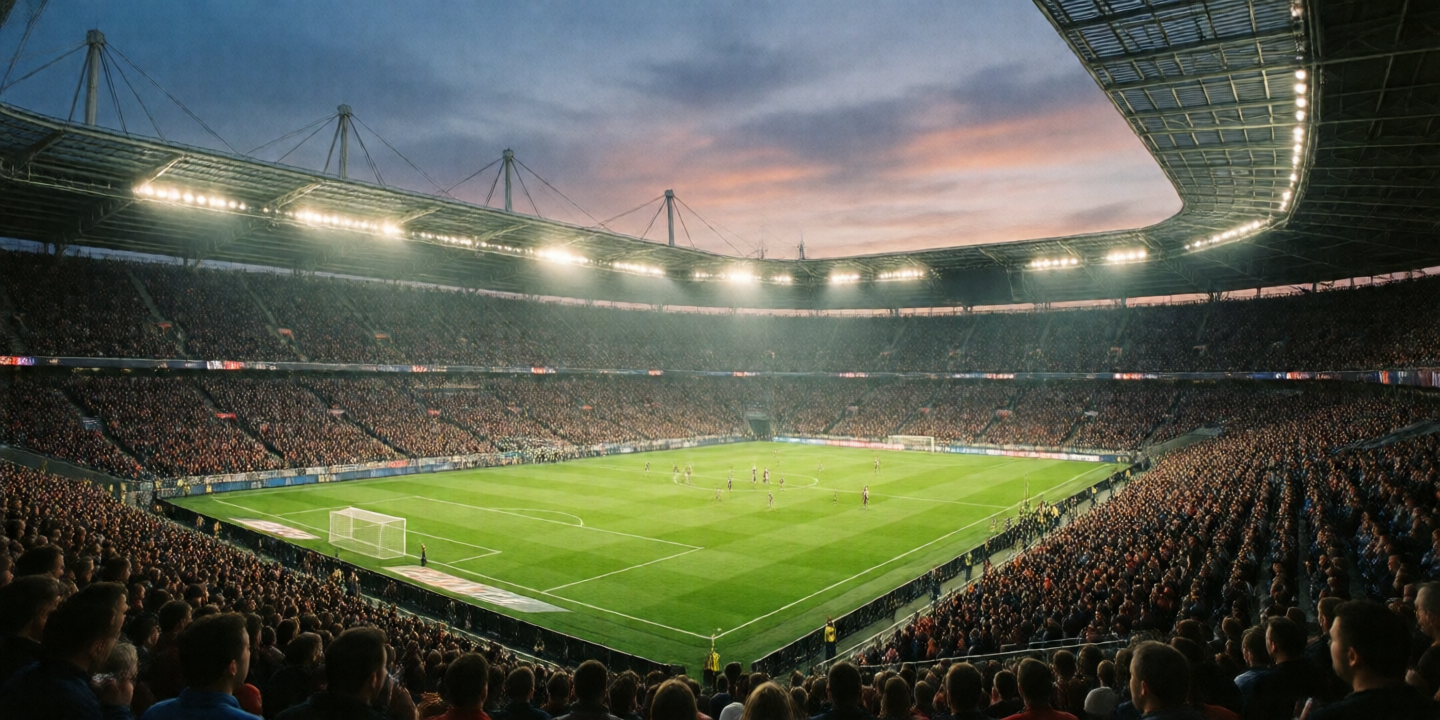
5 2026 World Cup Betting Mistakes Fans Make
The biggest mistakes fans make at the 2026 football world cup come from treating a 104-match, 48-team, 16-city tournament as if it were the old 64-match event. Football Insights tracks the tournament from June 11 to July 19, 2026, across the United States, Canada and Mexico, and the new format changes how groups, third-place qualification and travel fatigue work. Twelve groups of four send 32 teams into a new round of knockout play: the top two in each group plus the eight best third-placed sides. That means finishing third is a roughly two-in-three outcome on paper, which is why so-called "must-win" panic is often overpriced. Match locations also matter, since Los Angeles alone hosts eight matches, including the U.S. opener at SoFi Stadium on June 12. The practical takeaway: build your plan around the format math and travel schedule first, then stake small and only where the price still looks generous.
Picture the scene, partner, because the story starts in a place that looks nothing like a betting slip. It is early June in Los Angeles, the sun is bouncing off the columns of the Memorial Coliseum at Exposition Park, and a crowd that has been planning this summer for years is already singing before a single ball is kicked. Everyone in that crowd believes they have "inside information." I have sat in rooms like that for most of my life, and I can tell you the loudest confidence is usually the cheapest thing on the market. The people who get paid at a tournament this size are not the loudest. They are the ones who noticed, while the party raged, that the rules of the game quietly changed underneath everybody's feet. Stay with me, because the first change is hiding in plain sight in the arithmetic, and the "official" previews barely mention what it does to prices.

Ready to see how the pros read a tournament like this? Take a look at the tools and offers waiting for you.
How Big Is the 2026 Football World Cup, Really?
The 2026 football world cup has 48 teams, 104 matches and 16 host cities across three countries, running June 11 to July 19, 2026. That is 40 more matches than the 64 played in 2022, and the final is set for MetLife Stadium in the New York New Jersey area.
Numbers like these are easy to nod at and hard to feel, so let me translate them into money terms. Seventy-two of those matches are group games, which means most of the tournament is played before a single knockout tie exists. According to the 2026 FIFA World Cup entry on Wikipedia, it is the first edition with 48 finalists, and the new round of 32 sits between the groups and the old round of 16. More matches means more soft lines, more tired squads and more chances for a sloppy price to slip through. It also means more chances for you to bleed out slowly by betting every night because the schedule is "full." Before we get into myths, here are the five mistakes that give this article its title, in the order I see them cost people the most:
- Using the old 64-match logic to judge group-stage danger and qualification odds.
- Paying a premium for "must-win" narratives that the third-place rule has diluted.
- Ignoring kickoff time zones, travel distance and recovery days between host cities.
- Mistaking fan-zone atmosphere and social-media hype for genuine team information.
- Sizing stakes for a 39-day party instead of for a 104-match marathon.
2026 world cup group-stage predictions and team tactics
Where Do Fans Actually Gather During the 2026 Football World Cup?
Fans gather at stadiums, the FIFA Fan Festival and official fan zones in each host region. In Los Angeles, the FIFA Fan Festival runs June 11 to 14 at the Memorial Coliseum, while official fan zones and community watch parties stretch across 39 days of celebration.
Here is a detail most previews blur together, and it matters for anyone planning a trip around the tournament. The Los Angeles organizers describe their summer in three short lines on losangelesfwc26.com: "Eight matches. 39 days of fan celebrations. One unforgettable summer in Los Angeles." Read that again with a sceptical eye. The 39 days belong to the wider fan-zone program, while the headline Fan Festival, with live matches, food and a music lineup that includes Steve Aoki, Normani and DEORRO, is a four-day window. Plan a visit for the wrong dates and you will be the person standing outside a gate with a very expensive hotel booking. Atlanta tells a different story. Its host committee pitches the city as "the soccer city of the South," with Atlanta United supporters and Mercedes-Benz Stadium, a semifinal venue, as the centerpiece. Two cities, two moods, and neither mood moves a single price on a betting board, which brings us to the myths.

Myth 1: "The Old 64-Match Maths Still Applies" — Debunked
Most fans still price qualification the way they did in 2022, when 16 of 32 teams advanced. In 2026, 32 of 48 advance, so two-thirds of the field survives the groups. Qualification prices built on the old 50 percent mindset overrate the risk of elimination.
Let me walk you through why this is the cheapest edge in the building. The group stage now ends with a ranking of all twelve third-placed teams, and the best eight go through. Third place is no longer a coffin; it is a coin weighted two to one in your favour. So when a pundit calls a match "do or die" for a side with three points, remember the quotation marks that phrase deserves. The real story lives in goal difference and goals scored, the tiebreakers that sort the third-place table. A team that wins 3-0 on matchday one has bought itself an insurance policy that a 1-0 winner has not, and some coaches will keep pushing late for that reason alone. Another operational quirk worth noting: FIFA schedules the final round of group games for each group at the same time, so you cannot use one match's result to hedge the other. Practitioners treat that simultaneous kickoff as a trap for live bets, because the information you want arrives after the market has already moved.
Myth 2: "Host Nations Always Dominate on Home Soil" — Partially True
Host nations have a real historical edge, but it is smaller than the legend suggests. Six of the 22 tournaments through 2022 were won by the host country, and the 2026 hosts are three nations spread over 16 cities, which dilutes any single-crowd effect.
The U.S. Men's National Team opens its tournament on June 12 at SoFi Stadium in Los Angeles, and the temptation to back the home side because of the noise is strong. I understand the instinct. A stadium full of supporters is worth something, and the data on referee behaviour and travel supports a modest home advantage. But look at who actually fills a Los Angeles stadium: one of the most diverse metropolitan areas in the world, where diaspora supporters of dozens of countries outnumber neutral locals in many fixtures. The "home crowd" in the United States is therefore far less partisan than the one Brazil enjoyed in 2014. Canada and Mexico complicate the picture further, because altitude and heat in certain host cities favour acclimatised squads over the hosts themselves. So the partial truth is this: hosts get a small bump from fewer travel miles and familiar climates, not a magic carpet. If the price already bakes in a full "home magic" premium, you are the one paying for the party, and I do not pay for parties.
host nation records and home advantage statistics
Want to compare how the tournament markets are priced before you commit a single unit? Check out the details here.
Myth 3: "Fan-Zone Buzz Predicts Results" — Flat-Out False
Atmosphere does not predict outcomes. Fan-zone crowds, social-media hype and festival lineups carry no measurable information about team strength, and betting markets already absorb public enthusiasm into the price. Treat the buzz as entertainment, never as an edge.
Think about how many "signals" fans collect during a tournament week: the roar from a watch party, the viral clip of a striker laughing in training, the Atlanta crowd waving flags outside Mercedes-Benz Stadium. Every one of them feels like evidence. None of them is. Public money chases the loudest narratives, so a hyped team is often shorter in price than its true probability warrants, and the quiet side across the table is the one hiding the value. The same principle explains why the glossy official materials, with their music lineups and "unforgettable" summers, tell you nothing about how a back line handles a high press. I keep a simple rule in my own routine, and I will share it as one partner to another: if a piece of information is free, loud and shared by two million people, it is already in the price. Only quiet, boring facts, such as rest days between host cities and a coach's rotation record, are still worth paying attention to.

What Actually Works at the 2026 Football World Cup?
What works is a format-first, schedule-aware and stake-disciplined routine. Check the third-place table, count rest days and kilometres between host cities, and size every stake as a small fixed percentage of your bankroll. Fewer, better-priced selections beat nightly action across 104 matches.
Here is the routine I would hand to a partner on the first morning of the tournament. It is deliberately dull, because dull is where the margin lives.
- Fix your unit before the opening whistle: one to two percent of your tournament bankroll per stake, never raised after a win and never doubled after a loss.
- Track the live third-place table after every matchday, including goal difference and goals scored, because that table decides who the eight survivors are.
- Note rest days and travel between host cities; a side flying from the Pacific coast to the Eastern seaboard on short rest has a real physical cost that casual previews rarely price in.
- Set a ceiling for matches per week. With 72 group games in roughly two and a half weeks, selectivity is a bigger edge than any model.
- Log every stake and the price you took, so you can measure whether you beat the closing line rather than just whether you won.
Now the contrarian part, backed by reasoning rather than "trust me." Early group matches are the most overbet, because everyone is hungry for action after a four-year wait, so the sharpest prices often appear on matchday three, when the third-place math creates genuine incentives that the public has not worked out yet. Our match analysis at Football Insights follows that logic daily, and you can find the broader framework in our tournament betting strategy and bankroll management guide.
According to FIFA, the competition is hosted jointly by Canada, Mexico and the United States, which makes travel logistics a genuine analytical variable. Use it.
Ready to put a disciplined plan into action this tournament cycle? Get started today with a closer look at what is on offer.
What Should You Ignore Around the 2026 Football World Cup?
Ignore anything that is loud, free and widely shared: tipster guarantees, viral training clips, fan-zone mood, celebrity lineups and "expert" labels on outcomes. None of these adds information the market has not already priced in, and several are built to push you into betting more often.
Let me be blunt about the noise, because it is where most of the money leaks out of otherwise sensible people. The first thing to drop is the idea of a "lock," a word that appears in tipster feeds roughly as often as the word "football." No match in a 104-game tournament is a lock, and anyone selling certainty is selling something else. The second is the festival glitter: the Los Angeles line-up of Steve Aoki, Normani and Los Lobos is a wonderful reason to buy a ticket and a terrible reason to back a team. Third, ignore the pressure of the schedule itself. A full match calendar is not an obligation, and skipping a night costs you nothing. Fourth, set aside any "official" narrative about momentum, since a team that won its opener 1-0 and a team that lost 4-0 each face the same physics on matchday two. Finally, shrug off the pull of recent results from a different format. Qualifiers and friendlies played at home in front of friendly crowds tell you much less about a team than a rested squad's tactical shape against a high line.
player stats and injury tracker for every squad
Final Whistle: Play It Like a Partner, Not a Fan
The 2026 football world cup rewards people who read the structure before the story. The 48-team format, the third-place lifeline, the simultaneous final group games and the long haul between host cities create real, specific gaps in how the public prices matches, and none of them show up in a fan-zone chant. The five mistakes in the title are all versions of one error: letting excitement do the thinking. Football Insights will keep tracking those gaps day by day, because a tournament this long is won by patience, not by passion. One last, important note from someone who has seen both sides of the table: betting is for adults of legal age in jurisdictions where it is permitted, never stake money you cannot afford to lose, and use limits and cooling-off tools whenever the game stops being fun. If you want to take the next step with a clear head and a plan, this is the moment.
Frequently Asked Questions
Q: What is the 2026 football world cup format?
A: The 2026 football world cup has 48 teams split into 12 groups of four, played from June 11 to July 19, 2026. The top two in each group and the eight best third-placed teams advance to a new round of 32. In total, 104 matches are played across 16 cities in the United States, Canada and Mexico.
Q: How many teams advance from the groups in 2026?
A: Thirty-two of the 48 teams advance, which is two-thirds of the field. That includes 24 group winners and runners-up plus the eight best third-placed teams. Ranking among third-placed sides uses points first, then goal difference and goals scored, so even a team with a single win can survive on a strong goal tally.
Q: How do I avoid the most common World Cup betting mistakes?
A: Start with the format, not the hype. Work out how the third-place table affects each team's incentives, check rest days and travel distance between host cities, and fix your stake at one to two percent of your bankroll. Keep a log of prices taken, skip nights with no value, and never chase a loss.
Q: Is the FIFA Fan Festival in Los Angeles the same as the official fan zones?
A: No, they are different programs with different dates. The FIFA Fan Festival at the LA Memorial Coliseum runs June 11 to 14 with live matches, food and music. Official fan zones and community watch parties run across Los Angeles County during the wider 39 days of fan celebrations, so check each venue's dates before booking travel.
Q: Is backing host nations like the USMNT a good idea?
A: Not automatically, because the home advantage is real but modest. Six of the 22 World Cups through 2022 were won by the host country, and the 2026 hosts play in 16 cities with very mixed crowds. The U.S. opens on June 12 at SoFi Stadium, so judge the price against tactical strength first and crowd noise last.
Q: What should I do if I am losing during the tournament?
A: Stop increasing your stakes and take a break. Chasing losses is the fastest way to turn a small downswing into a large one, especially across a 104-match schedule. Review your log, lower your unit if needed, use deposit limits or cooling-off tools, and contact a local support service if gambling stops feeling under control.